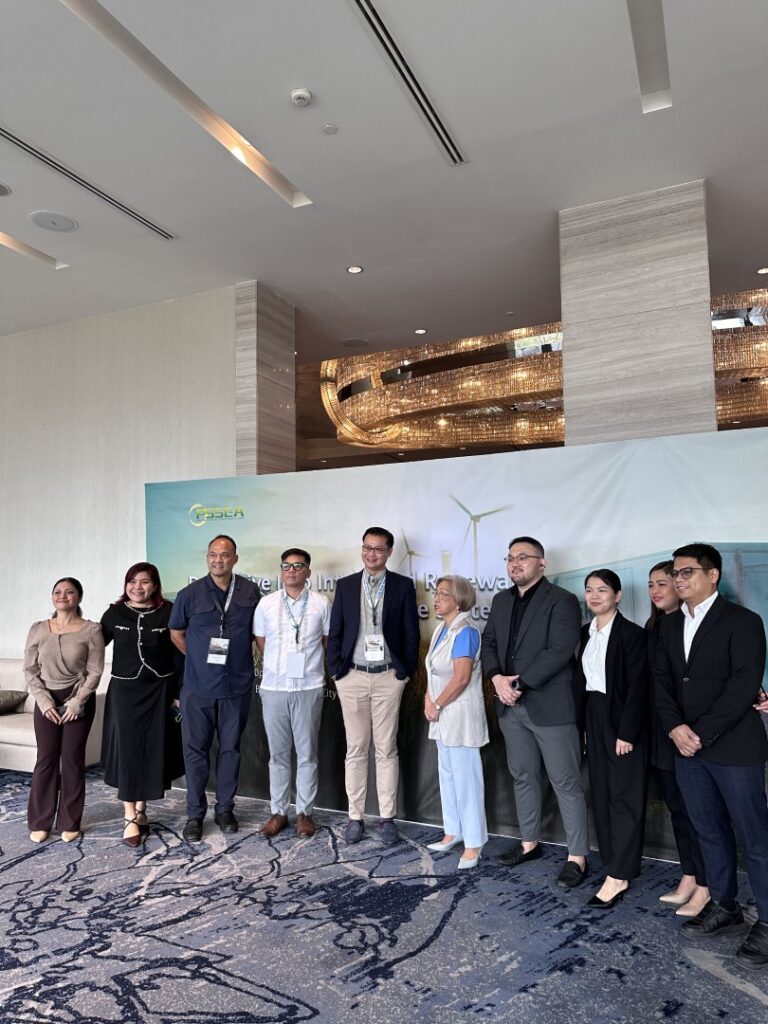



Quezon City, 16 July 2026 — Government agencies, industry leaders, local governments, civil society organizations, financial institutions, and community representatives gathered for the “Responding to the Energy Emergency: Advancing Affordable Rooftop Solar” roundtable to discuss practical solutions for making rooftop solar more affordable and accessible to Filipino households and businesses.
Organized under the Sayang Ang Araw campaign, the policy dialogue came at a critical time as the country continues to navigate high electricity prices, growing power demand, and the challenges posed by global fuel market volatility. Discussions focused on identifying policy, regulatory, financing, and fiscal reforms that can accelerate rooftop solar deployment while strengthening the country’s energy security.
The roundtable was informed by the results of a recent Pulse Asia survey commissioned by the Institute for Climate and Sustainable Cities (ICSC), which found overwhelming public support for renewable energy. Among the survey’s key findings, 93% of Filipinos believe the government should make rooftop solar more affordable, while 91% said they would consider installing rooftop solar if affordable financing were available. The survey also found that 66% view renewable energy expansion as the country’s best long-term response to current energy challenges.
The discussion highlighted several priority areas, including streamlining permitting and interconnection processes, expanding access to financing, strengthening net metering implementation, improving consumer protection, supporting quality standards for installers, and increasing public awareness of available incentives.
Representing the Philippine Solar and Storage Energy Alliance (PSSEA), Engr. Aibar Rabi Rashad F. Bibi, Co-Lead of the Rooftop Solar Working Group, shared that demand for rooftop solar has increased significantly following the declaration of the National Energy Emergency. He noted a growing shift among consumers from viewing solar primarily as a cost-saving investment to recognizing its value in ensuring energy security through hybrid solar and battery systems.
PSSEA also underscored that accelerating rooftop solar adoption requires an enabling ecosystem. Beyond supportive policies, the alliance highlighted the need for affordable financing, high-quality installation standards, and innovative approaches, including the development of a secondary market for solar equipment, to make clean energy solutions accessible to more Filipinos.
As discussions concluded, participants agreed that achieving wider rooftop solar adoption will require sustained collaboration among government, industry, local governments, financial institutions, and communities. By aligning policy, investment, and implementation, stakeholders can help deliver a cleaner, more affordable, and more resilient energy future that advances the country’s goals of energy security, affordability, and sustainability.